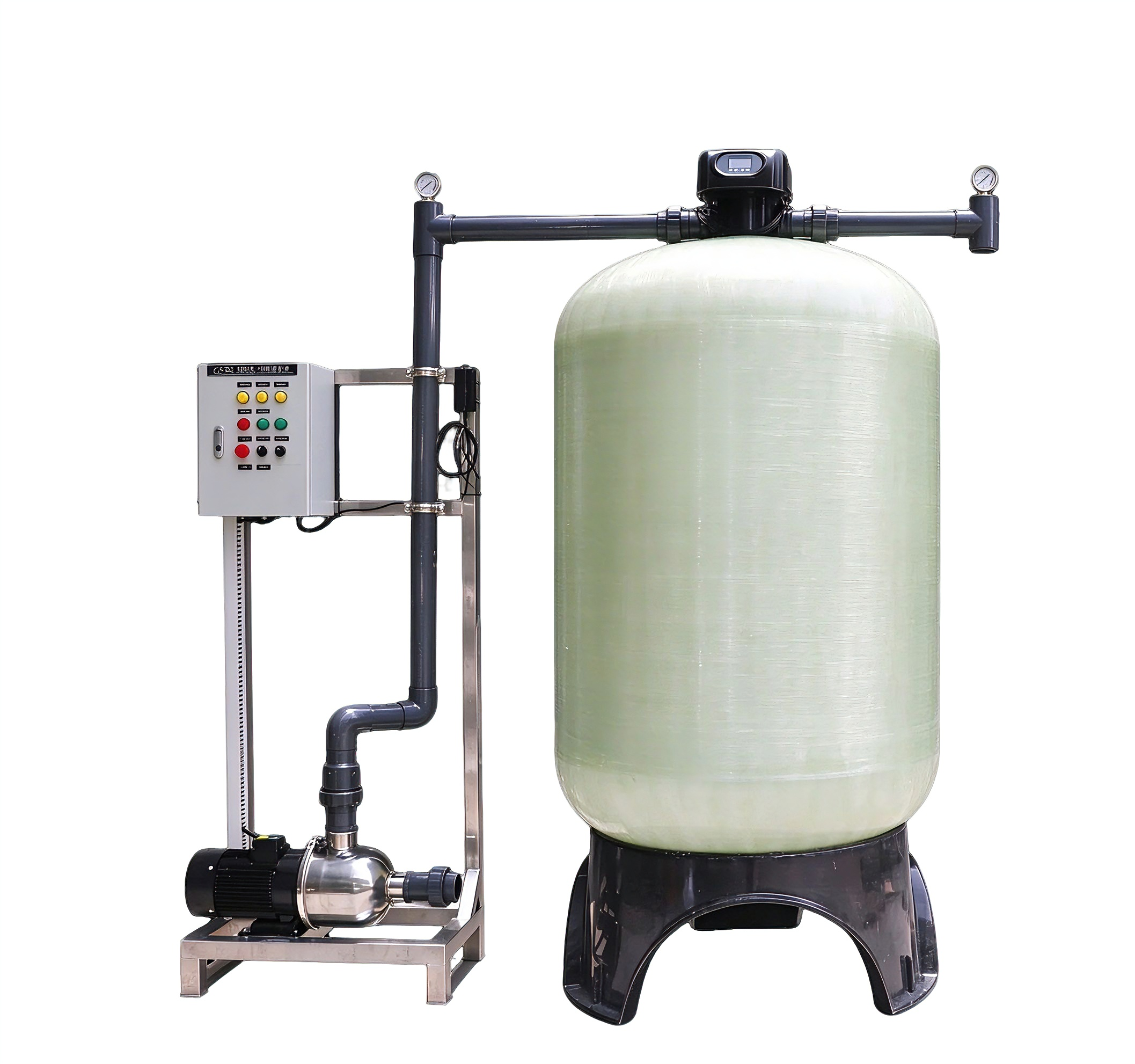
Many industrial buyers focus only on the reverse osmosis main unit when purchasing water treatment equipment. They ask: Can I skip the pretreatment section to cut down the total budget?
The short answer is: It is never recommended. Skipping pretreatment will bring far higher long-term losses than the money you saved at the beginning.
What is water pretreatment?
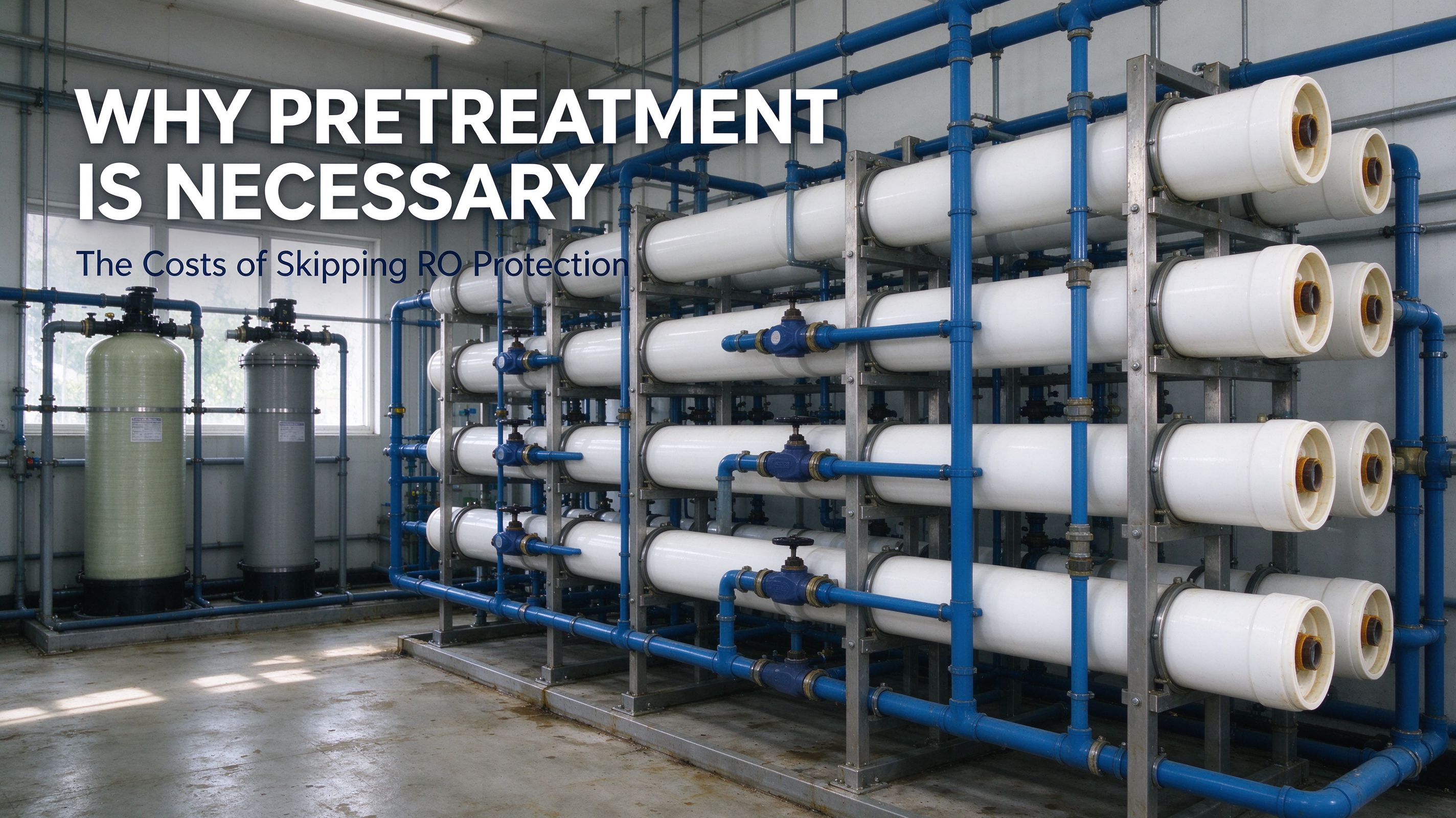
Pretreatment is the front-end process before the RO system. It usually includes multi-media sand filter, activated carbon filter, softener and security cartridge filter. Its core job is to remove suspended solids, sediment, colloids, free chlorine, iron and manganese, and large organic particles from raw water. These impurities are the biggest enemies of RO membranes.
What will happen if you skip pretreatment?
- Rapid RO membrane fouling and blockage Raw water directly flows into the RO membrane elements. Sand, silt and sticky colloids will quickly cover the membrane surface. The membrane pores get blocked in a short time. Your water output will drop sharply.
- Frequent chemical cleaning You have to perform CIP chemical cleaning much more often. Each cleaning consumes chemicals, stops production, and slowly damages the membrane layer.
- Greatly shortened membrane service life A well-protected RO membrane can run for 2–3 years. Without proper pretreatment, membranes may be damaged within 3–6 months. Replacing RO membrane modules is one of the most expensive parts of the whole water system.
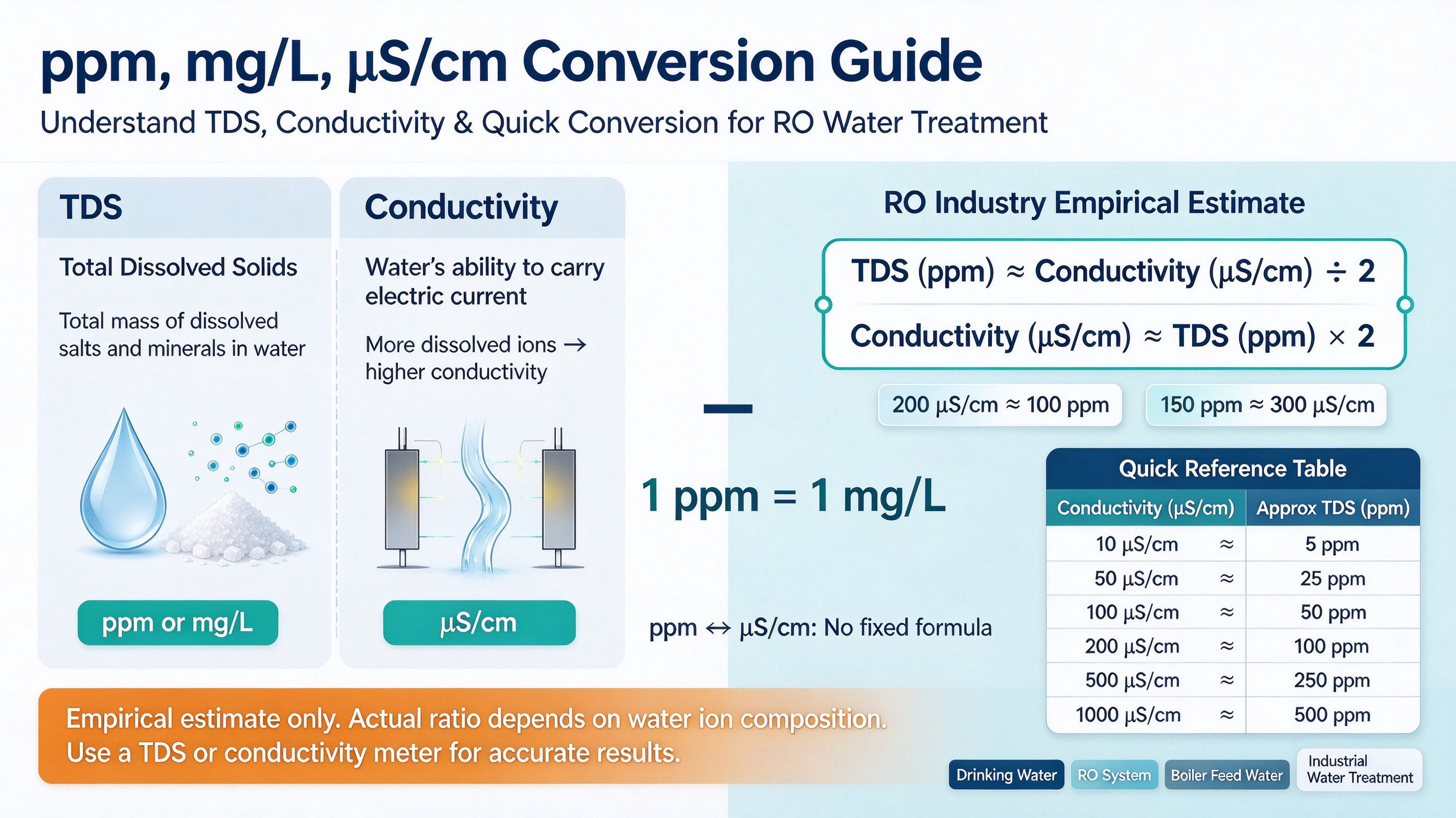
- Unstable water quality The influent fluctuation will directly affect the desalination performance of reverse osmosis. The TDS and conductivity of produced water cannot stay stable, which fails your production standard for industrial use.
- Higher energy consumption Fouled membranes require much higher operating pressure to maintain the same water flow. Your high-pressure pump consumes more electricity every day.
- Unplanned production shutdown Sudden membrane clogging means you have to stop your factory line. For food, pharmaceutical, electronics and chemical industries, unexpected downtime causes huge economic losses.
When can you simplify pretreatment?
Only if your raw water is high-quality tap water with very low turbidity, low SDI value and stable water quality, you can simplify the pretreatment section. But you still need a security filter before RO. You cannot remove pretreatment completely.
Our suggestion
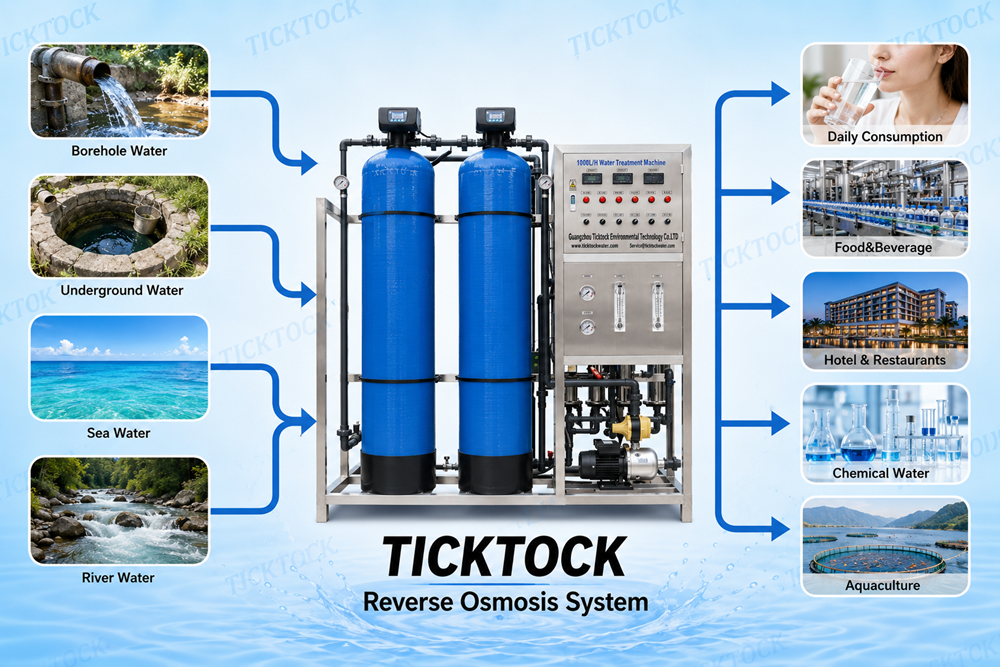
A complete pretreatment system is not extra cost, but protection for your expensive reverse osmosis membranes. We customize pretreatment solutions according to your raw water test report, including turbidity, SDI, iron, chlorine, hardness and TDS data.
If you have raw water test data, send it to us. Our engineer will design the most suitable pretreatment + RO system for your project.
FAQ
Q1: Can I run the RO system without pretreatment if my raw water is tap water? A: Tap water still contains residual chlorine, colloids and tiny suspended solids. You may simplify the pretreatment, but the security filter is mandatory. Complete removal of pretreatment is not recommended.
Q2: What is SDI, and why is it important for RO pretreatment? A: SDI (Silt Density Index) shows the fouling potential of raw water. RO systems require SDI<5 normally. Without pretreatment, the SDI value will be too high and membranes will foul rapidly.
Q3: How often do I need to clean RO membranes if I skip pretreatment? A: Normally you may need chemical cleaning every 1–3 months. In contrast, with proper pretreatment, cleaning is usually only required once every 6–12 months. Frequent cleaning accelerates membrane degradation.
Q4: Is the security filter the same as full pretreatment? A: No. A 5μm security filter is only the last protective barrier. It cannot remove dissolved hardness, free chlorine, colloids and iron ions. It cannot replace sand filters, activated carbon filters or water softeners.
Q5: How much extra cost will pretreatment add? A: The one-time investment of pretreatment is much lower than the cost of frequent membrane replacement, production downtime and high electricity bills caused by fouled membranes. It is a cost-saving investment in the long run.
Q6: What pretreatment equipment do I usually need for raw well water? A: Well water usually needs multi-media filter, activated carbon filter, water softener and 5μm security filter. We adjust the configuration based on your raw water test report.